Logic
System on Chip (SoC)
As data traffic generated from various devices continue to surge, the demand for faster and more efficient logic chips solution is increasing. The logic chips are being packaged in smaller form factors, utilizing flip chips ball grid array (FC-BGA), wafer-level packaging (WLP), system in package (SiP) and system on chips (SoC) for higher integration.
To keep pace with these advances, semiconductor manufacturers are facing to reduce the total cost of testing. The purpose of testing cost reduction is to eliminate unnecessary packaging of defectives, by conducting test at the wafer-level.
Because the test active area for FC-BGA and SoC applications need to be expanded, while maintaining electrical and mechanical performance such as current carrying capacity, fine pitch, pin force, the probe card design complexity increases as well.
To address these challenges, it is necessary to adapt vertical probe card solution.
KI's wafer probe cards deliver precision and efficiency to address evolving test challenges and boast a long life span.
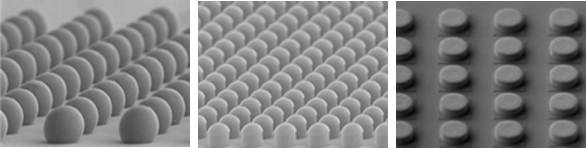
Pad type of SoC
Related Products
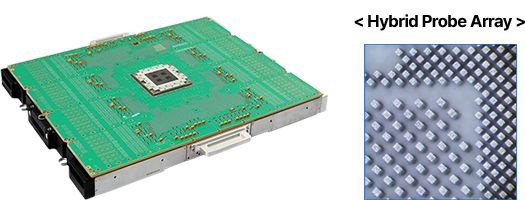
Taurus series
CMOS Image Sensor (CIS)
Image sensors convert light energy into electrical energy to generate images, performing a function similar to film within a camera.
Alongside improvements in the performance of the pixel elements themselves, technological advancements are being made to enhance image quality and expand the range of sensor applications. This includes BSI (back-side illuminated sensor) processes for light reception, 3D stacking technology, high-performance ADCs (analog-to-digital converters), image signal processing, and the integration of artificial intelligence (AI) capabilities.
KI's optical probe cards provide customized solutions for testing CMOS image sensors.
Sirius CIS Probe Scrub mark

Related Products
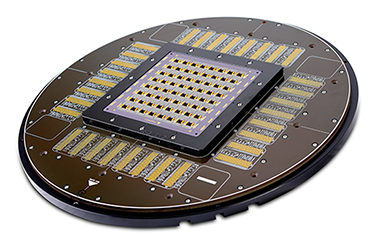
Sirius sesries
Display Driver IC (DDI)
Display Driver ICs are essential semiconductor chips that operate each subpixel. DDIs receive image signals from the device's CPU to generate and control output signals.
The evolution of DDIs (Display Driver ICs) is driven by high performance, low power consumption, multi-channel capabilities, and functional convergence. This evolution involves enhancing chip performance for high-resolution and high-quality displays, advancing low-power technologies for wearable devices, expanding TDDI (Touch and Display Driver Integration) technology that integrates touch functions, and increasing the number of channels.
KI has been evolving alongside DDI technology from its inception to the present day. While addressing conventional technology, we are simultaneously preparing for the arrival of next-generation DDI.
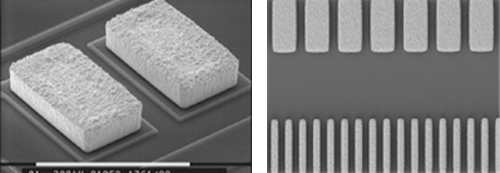
Pad type of DDIC
Related Products
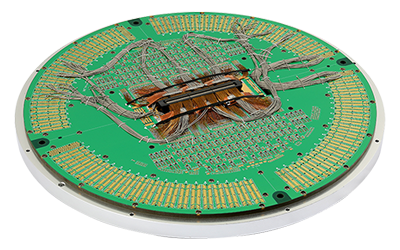
KI Advanced Cantilever P/C